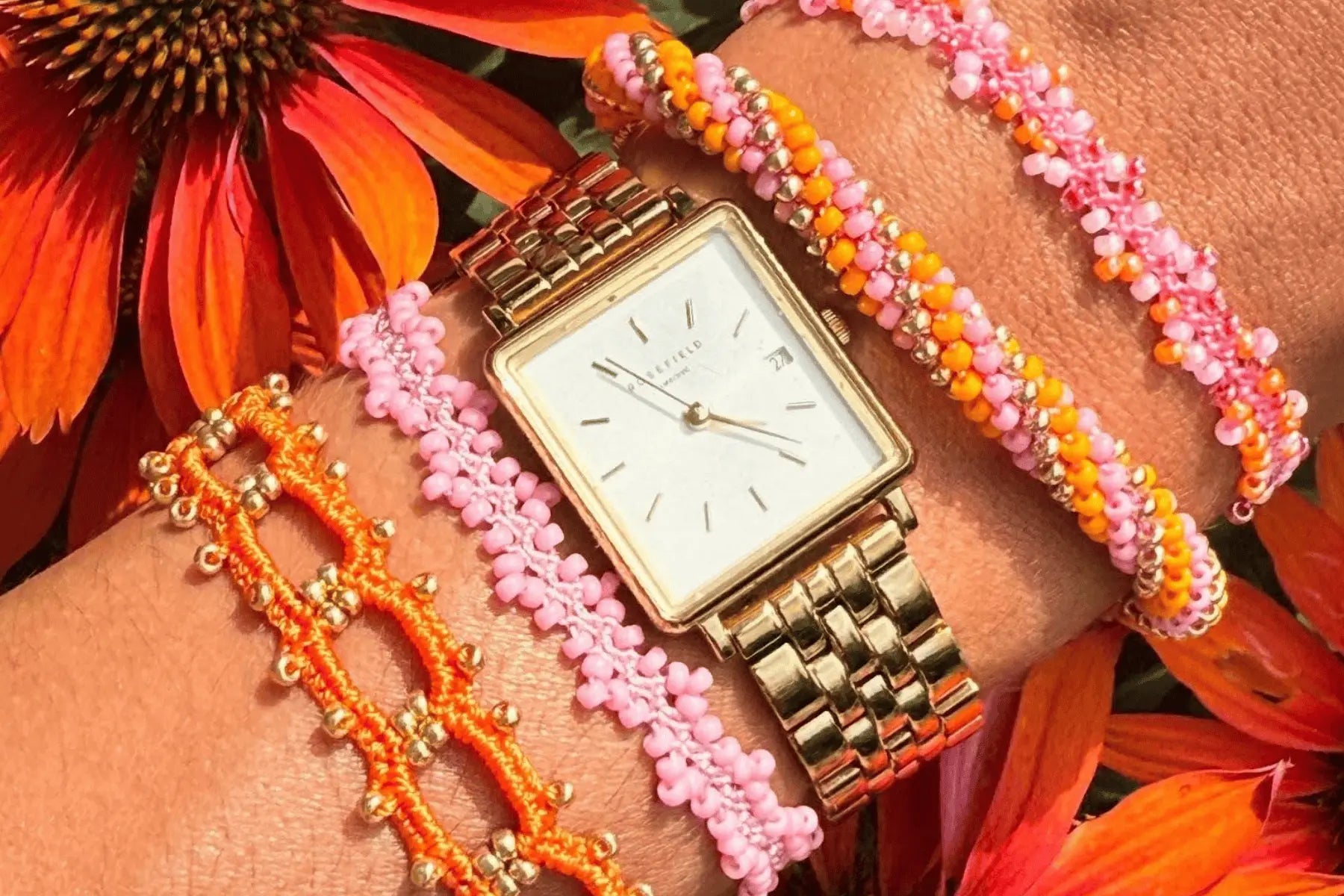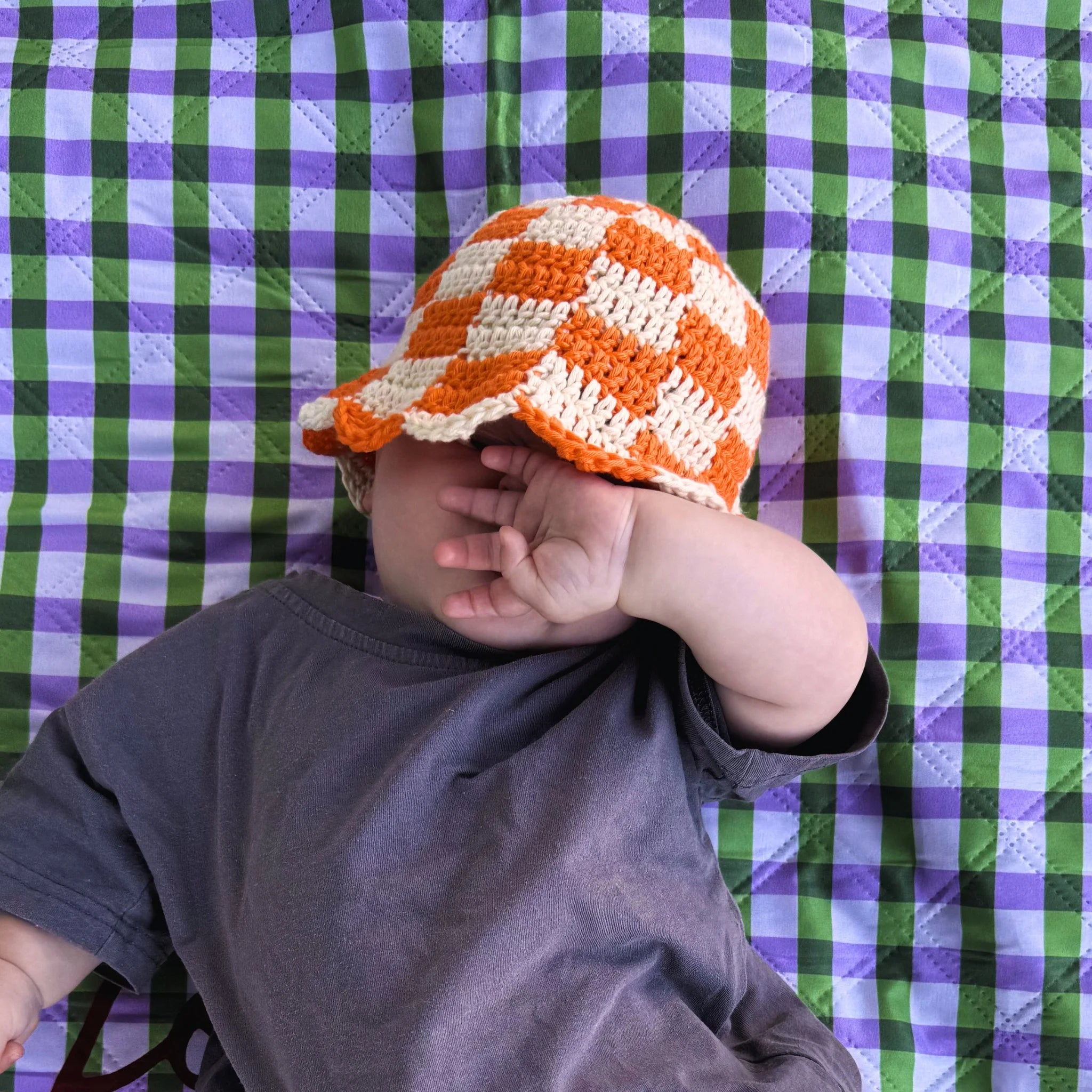
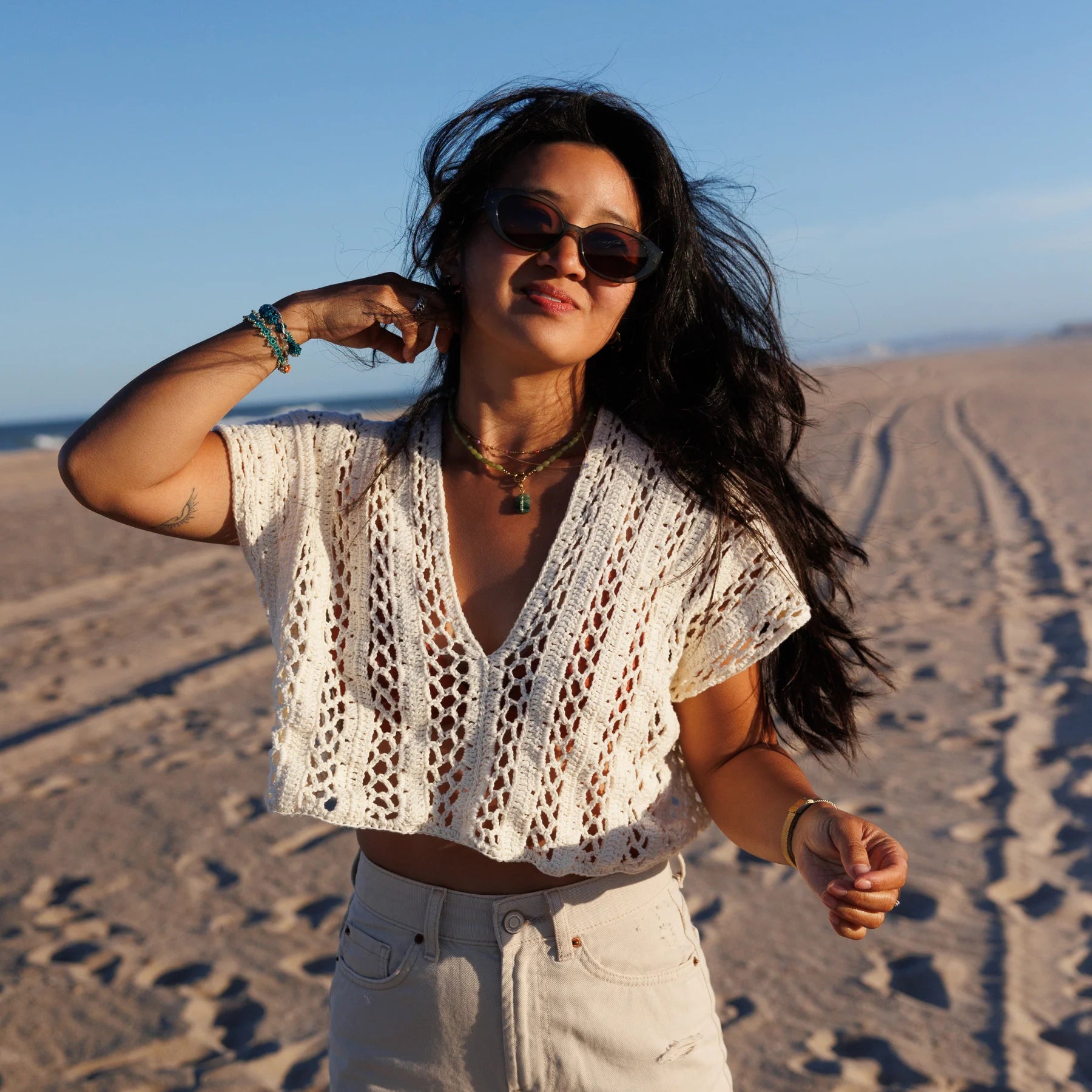

Brrr, the days are getting chilly again! But honestly? I don't mind one bit. Because every crochet lover knows: cooler days mean warmer projects, and working with wool is just so cozy. 🍂
Psst: did you know you can order the yarn in the photo? Send me an email at help@yupastudio.com if you'd like to give it a try!
Right now I'm working on a vest. The first question I asked myself wasn't which stitch I wanted to use, but which yarn is actually going to keep me warm?
Because no matter how pretty your pattern is: if the yarn is itchy, doesn't look great or doesn't drape nicely, you'll never end up wearing it. And that's such a shame!
So in this post I'm sharing what I look for when I choose yarn for my fall and winter projects.
Spoiler: with wool, merino or a wool blend, you almost can't go wrong.
Warmth starts with the fiber
The fiber your yarn is made of has a big say in how warm your project turns out. Animal fibers like wool and alpaca hold on to the most heat. Wool even stays warm when it gets a little damp (pretty handy in the rainy Dutch weather 🍂).
Here's a quick overview of the most common yarns:
|
Yarn |
Warmth |
Softness |
Good to know |
|---|---|---|---|
|
Merino wool |
High |
Very soft |
Choose superwash if you want to toss it in the washing machine without it shrinking or felting |
|
Regular wool |
High |
Varies |
Can be itchy, so always feel it first |
|
Alpaca |
Very high |
Super soft |
Light thanks to its hollow fibers, low elasticity and a lovely drape |
|
Mohair |
High, and light too |
Soft and fuzzy |
Your stitches are hard to see, and frogging is a real challenge |
|
Wool blend (e.g. wool with acrylic) |
Medium to high |
Soft |
Easy care, might breathe a little less |
|
Acrylic |
Medium |
Soft |
Doesn't breathe well and can pill |
|
Cotton |
Low |
Varies |
Cool and heavy, better for summer |
Soft, not itchy (because nobody wants an itchy sweater)
Whether wool feels itchy mostly comes down to how thick the fiber is. The finer the fiber, the softer it feels. That's why merino is so popular: the fibers are super fine and bend with your skin instead of poking it.
My go-to itch test? Hold a ball of yarn against the inside of your wrist or against your neck. Those are the most sensitive spots. Feels nice there? Then you can usually wear it right against your skin.
Still not sure? Then use the yarn for something you wear over a shirt, like a cardigan or (yep) a vest.
Thickness, hook size and airiness
Did you know warmth isn't only in the yarn, but also in the air between your stitches? Air insulates. So a light, airy stitch often keeps you warmer than a tight, stiff piece.
A few rules of thumb:
- Bulky yarn (6 mm hook and up) works up nice and fast and is warm, but it can get heavy in big projects if you use a heavier type of wool.
- Medium weight yarn (4 to 5 mm hook) works well for most sweaters, cardigans and vests.
- Crochet tightly? (You're not the only one!) Go up half a hook size. Bonus: your fabric gets softer and drapier right away!
And yes, I'm going to say it anyway: always crochet a gauge swatch first. I know, it feels like a waste of time, and I still skip it pretty often myself. But it shows you right away whether your yarn, hook and tension give you the result you're hoping for. That saves you a whole lot of frogging later. 😊
Checklist: what to check before you buy yarn for your next fall project
- Does it contain wool, merino or alpaca? Then you're good on warmth.
- Does it feel nice against your wrist or neck?
- Does the thickness suit your project (and how heavy you want it to feel)?
- Can it go in the washing machine, or do you prefer hand washing?
- Do you have enough skeins from the same dye lot? That way you won't get a color change halfway through.
Ready for fall?
With the right yarn, your next fall project becomes something you'll love wearing for years.
I'm so curious which yarn you'll pick this fall! Not quite sure yet? Email us at help@yupastudio.com and we'll give you personal tips. 🥰
Happy crocheting!
P.S. Follow me on Instagram for daily crochet inspiration :)