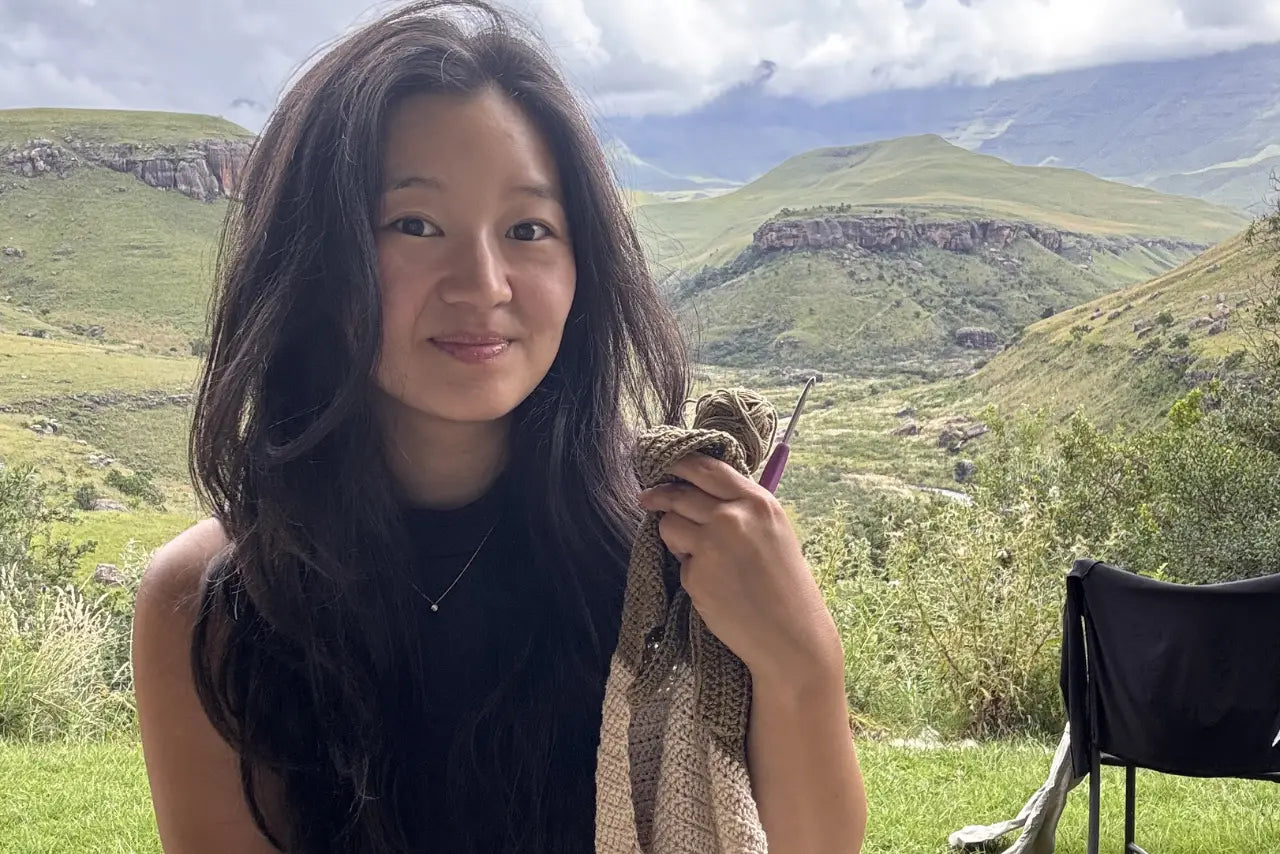


Hi! I'm Diana, guest blogger at Yupa Studio. If there is one part of crochet that plenty of people secretly dislike, it's weaving in ends. It's the kind of job you'd rather put off until the very last moment.
Honestly? Wherever I can, I happily leave my yarn tails hanging for a while too. But in the end you can't avoid it on most projects. And if you have to do it anyway, you may as well tackle it as efficiently as possible. With a few small adjustments you can save yourself a lot of frustration and time. I'm happy to share the three most important tips!
Tip 1: Crochet over your yarn tail as you go
This may sound really obvious, but even people who have been crocheting for years forget it sometimes. And yet it's one of the easiest ways to save time later on.
When you change color or start a new strand, you can often simply crochet the tail into your work over a few stitches. You essentially crochet around the tail, which secures it straight away.
The big advantage: you don't have to weave that tail in separately later. Especially on projects with lots of color changes this can make an enormous difference.
Tip 2: Use a blunt tip tapestry needle
Most people who are new to crochet always use an ordinary sewing needle to weave in their ends. That's simply because they don't know there are special needles for crochet and knitting.
A normal needle has a sharp point, so you quickly go straight through the yarn itself instead of between the stitches. That can damage the tail or make it visible on the front of your work.
A tapestry needle with a blunt tip is made for this. The tip slides between the stitches more easily without splitting the yarn. It sounds like a small detail, but it really does make weaving in ends a lot neater and faster.
Tip 3: Use a bent tip tapestry needle
And believe me, for most people this one is a real game changer!
Needles with a slightly bent tip make it much easier to go underneath stitches, especially in spots that are hard to reach. Think of small projects like amigurumi (crocheted toys). There you're often working on a round, compact piece, and maneuvering with a straight needle is quite tricky.
With a bent tip you can work far more precisely and you get underneath several stitches at once more easily.
Did you know, by the way, that there are also needles with both a blunt and a bent tip? The Jumbo darning needles by Clover are one example. Paula has been using them for a few years now and she told me they have become genuinely indispensable when finishing crochet projects.
If that has made you curious: do go and have a look at them in the Yupa Studio shop.
Finally
Weaving in ends may never become the most fun part of crochet, but it does make an enormous difference to how professional your end result looks.
By crocheting over your yarn where you can and using the right needles, you make the process not only faster, but a good deal less frustrating too.
My advice: don't see weaving in ends as an annoying final chore, but as the finishing touch on your project. It's exactly that little bit of extra attention that makes your crochet work look truly neat and finished.
Do you have a tip that makes weaving in ends easier? Do send us a message on Instagram!
PS. The Jumbo darning needles really do make your life easier!!
That's it for now, see you next time ✨
Love,
Diana